On August 28, Donald Trump announced the largest oil deal in world history. Three days later, the White House set out the terms in writing for the first time. These contradict Caracas, and the Pentagon contradicts itself. What is certain—and what is not.
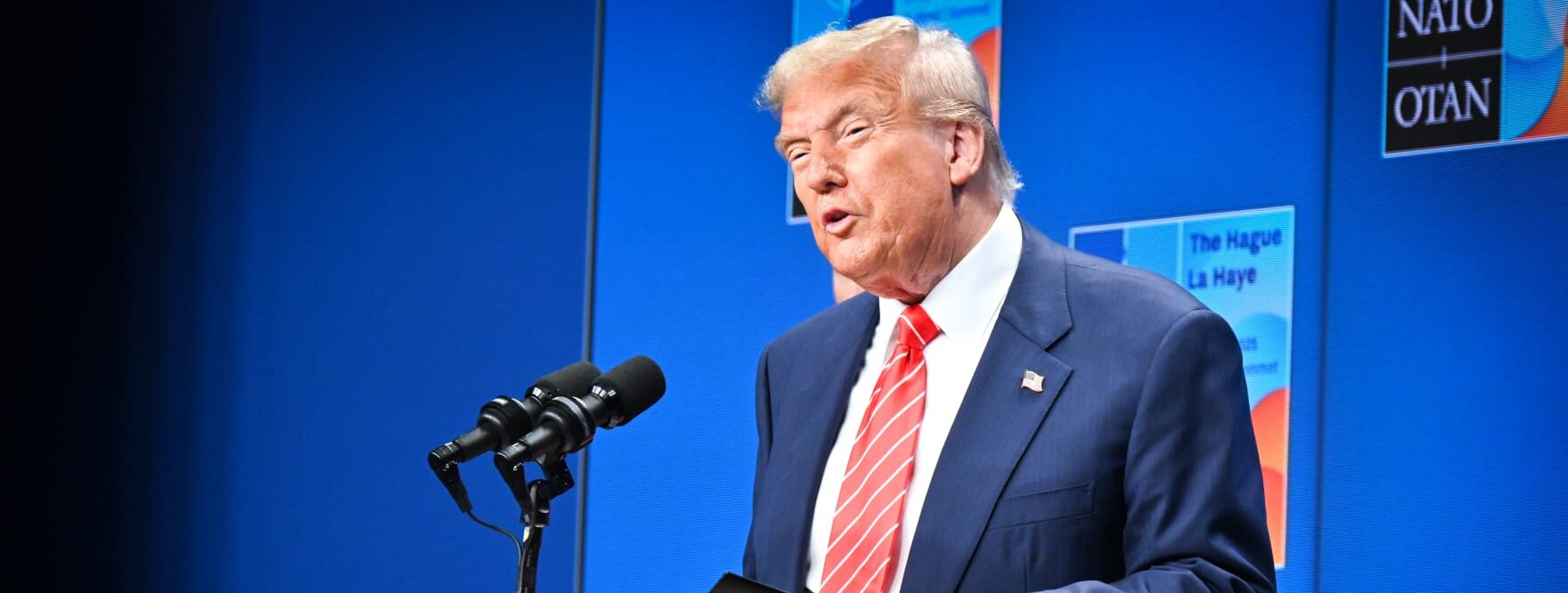
On Friday evening, August 28, 2026, at 6:47 p.m. U.S. Eastern Time, President Donald Trump posted a message on Truth Social. In it, he announced what he called the largest oil deal in world history: U.S. control over more than 65 billion barrels of proven oil reserves in Venezuela, at no cost to the American taxpayer.
For three days, that announcement was the only public document regarding the deal. Then, on the evening of Monday, August 31, the White House published a fact sheet. For the first time, the U.S. government laid out the structure of the deal itself on paper: the company’s name, the term, the percentages, and the control structure. News agencies such as AP, CNBC, and CBS picked up the story within a few hours.
That changes a lot. It also immediately highlights just how far apart the two governments are on their own agreement. While Caracas spoke of twenty-five years, Washington is talking about a hundred. And the arrangement described by the White House is one that the Pentagon said just last week it should not enter into.
What is still missing, despite everything: the agreement itself. A fact sheet is not a contract. No text has yet been published, no Venezuelan signatory has been announced, no decree has appeared in the Venezuelan Official Gazette, and no resolution of approval from the National Assembly or the Supreme Court has been found.
This article outlines what is certain, what is uncertain, and what is simply unknown. Whenever a fact is based on a single source or remains unconfirmed, this is explicitly stated. This is not a disclaimer out of an abundance of caution—it is the core of the story.
How Venezuela Ended Up Here
To understand why a U.S. president has control over Venezuela's oil fields, you have to go back to January 3, 2026.
That night, a U.S. military operation began in Venezuela, since then officially known as Operation Absolute Resolve. Nicolás Maduro and his wife, Cilia Flores, were captured and flown to New York, where he faces federal charges of narco-terrorism and drug trafficking.
That same day, the Venezuelan Tribunal Supremo de Justicia ordered Vice President Delcy Rodríguez to assume the interim presidency. She was sworn in on January 5 by her brother Jorge Rodríguez, president of the National Assembly. The court characterized Maduro’s absence as temporary, not permanent—so formally, he is still president, and he himself claims to have been kidnapped.
That distinction is not just legal hair-splitting. The Venezuelan Constitution allows a vice president to cover a temporary absence for up to ninety days, with a single ninety-day extension granted by the Assembly. That initial term expired in early April without a public vote on an extension. The 180-day deadline expired on July 3, 2026. Rodríguez has been governing ever since without a mandate based on a public decision—and she is the one granting 100-year concessions on behalf of Venezuela.
More happened during those months. Hundreds of political prisoners were released; the human rights organization Foro Penal counted 621 as of early March, with, according to its own figures, more than 500 still in detention. U.S. Secretary of State Marco Rubio said on January 4 that the United States would not run Venezuela on a day-to-day basis; pressure would be applied through the existing oil embargo, without U.S. ground troops.
Why Now?
The timing is no coincidence, and the announcement itself makes little secret of that.
The U.S. midterm elections are just over two months away. The average price of gasoline is above four dollars per gallon. And on the day of the announcement, the war with Iran reached its sixth month, with no end in sight; according to market analysts, this has disrupted about one-fifth of the global crude oil supply.
That also explains the status of the U.S. strategic reserve. According to weekly figures from the U.S. Energy Information Administration, the reserve stood at 289.7 million barrels in the week ending August 21, 2026—40.6 percent of capacity, the lowest level since November 1982. A report by the U.S. Government Accountability Office indicates a withdrawal of more than 120 million barrels following the closure of the Strait of Hormuz in late February.
In his post, Trump wrote that the deal will significantly lower gas prices for all Americans. On Monday, when asked about the timeline, he said it might take “a little while.” Virtually all analysts consulted say it will take years: there isn’t a single barrel of Venezuelan oil that will start flowing tomorrow.
The money had been coming in for seven months
While the world was focused on the August announcement, a flow of funds had been underway since January that received far less attention—and that is what makes the agreement understandable.
According to an information sheet from the U.S. Department of Energy, proceeds from Venezuelan oil are first deposited into U.S.-controlled accounts at foreign banks. Payments are made at the discretion of the United States, and the arrangement is in effect indefinitely. That passage is included in the findings of a U.S. bill, S.3838, and is therefore public.
On January 9, Trump signed Executive Order 14373, which was published in the Federal Register on January 15. Strictly speaking, that order is not a sanction but a protective measure: it declares the seizure of Venezuelan oil funds held by the U.S. Treasury to be prohibited and void, and grants the Department of the Treasury regulatory and licensing authority.
On January 28, Rubio testified before the Senate regarding an account in Qatar. Three hundred million dollars had been disbursed; two hundred million remained in the account. Regarding oversight of the account, he said that the audit process had not yet been finalized. The Financial Times calculated in late July that the total revenue collected had by then exceeded $13 billion; Trump confirmed that amount to reporters.
Who oversees this is at the heart of the U.S. political battle over this issue. Senators Chuck Schumer and Adam Schiff introduced the Venezuela Oil Proceeds Transparency Act in February, which would require the U.S. Government Accountability Office to conduct an audit; a similar proposal is pending in the House. Robert Garcia, the top Democrat on the Oversight Committee, requested on January 9 all communications with Chevron, ExxonMobil, ConocoPhillips, and Continental Resources—the first three responded to that letter. On February 23, letters were sent to the Departments of the Treasury, State, and Energy demanding a detailed account. As far as is publicly known, those departments have not responded.
Two aspects of that investigation deserve more attention than they are receiving. On January 29, Garcia wrote to the trading firms Vitol and Trafigura regarding their role in the sale of Venezuelan oil. Among other things, the letter asks whether the traders were aware of the military action in advance, and points to campaign finance records which, according to the authors, show that a Vitol trader had previously donated $6 million to Trump’s campaign.
The day before, Representative Sean Casten, along with twelve other Democrats, sent a letter to twenty-one oil and oil services companies warning them of the legal and financial risks of participating. The gist: Congress, the next administration, or a future Venezuelan government could attempt to invalidate such agreements, and participating companies could face civil liability to Venezuelan creditors. Informal commitments made by the current government, they wrote, may not be recognized by a subsequent one.
The law was first amended
The agreement does not come into being in a legal vacuum. On January 29, 2026—less than a month after Maduro’s fall—Venezuela published a sweeping reform of the Ley Orgánica de Hidrocarburos, the Organic Hydrocarbons Law. The implementing regulations followed on July 7. The announcement came on August 28. The sequence is no coincidence: each step paved the way for the next.
The reform does four things that matter right now.
It opens the sector to private operators. In addition to the state and the mixed-ownership companies in which the state holds a majority stake, a third entity will be introduced: private companies domiciled in Venezuela, operating under contract with state-owned enterprises. In practice, this means that a private company can become the operator of fields that remain the property of the Republic.
It takes parliament out of the loop. Previously, the National Assembly had to approve joint ventures. Now the president authorizes them, and Parliament is merely informed—with a report on the agreed-upon terms and the specific benefits for the Republic. This shift is explicitly stated in the text of the law and has been deemed constitutionally problematic by several legal experts.
It lowers the floor for state revenue. Whereas the old text stipulated a royalty of thirty percent, legal analyses of the reform indicate that the new text refers to a royalty of up to thirty percent. That little word eliminated the lower limit.
It does, however, require competition. The competent authority must encourage multiple bids. Direct award is permitted only for reasons of public interest or under exceptional circumstances, and then only with the prior approval of the Council of Ministers. No such Council of Ministers decision has been published. This means that its absence is not merely an administrative oversight but a gap in a legal requirement.
Law firms that analyzed the regulations—including PwC Venezuela, Holland & Knight, and WDA Legal—describe a combined royalty and integrated tax rate ranging from 20 percent for new fields to 35 percent for existing producing fields. I have not been able to verify these percentages against the original gazette text myself; they are based on the analyses of those firms.
Rodríguez’s announcement is problematic in two ways. She spoke of a minimum royalty of 16 percent. While this has been legal since the reform—since the floor has been removed—it is below the 20 percent that the regulations prescribe for new fields, according to those analyses. Whether that 16 percent refers only to the royalty or to the combined rate cannot be publicly determined: the document setting out the terms for each project has not been published.
And she mentioned a 34 percent profit tax. That figure only makes sense once you know that the standard Venezuelan oil tax rate is 50 percent. That 50 percent rate can be reduced, but only through an individual procedure for each project. The regulations apply the 34 percent rate generically to all new fields, bypassing that procedure. Legal experts such as José Ignacio Hernández and the law firm WDA Legal view this as a conflict with the principle of legality in tax matters enshrined in the Venezuelan Constitution: a tax rate must be established by law, not by an executive order.
What the White House Itself Is Saying Now
Monday evening's fact sheet is the first document in which the U.S. government describes the structure. It's worth reading it point by point, because virtually every sentence addresses a question that had remained unanswered until then.
The term is 100 years. The Venezuelan interim authorities have granted North American Blue Energy Partners—NABEP for short—100-year concessions for 17 oil fields with approximately 65 billion barrels of proven reserves. Three days earlier, Rodríguez had spoken on state television about a twenty-five-year project.
That twenty-five-year period does appear in the American document, but in a different context: as the period over which royalties and taxes are estimated, “the first twenty-five years.” That is likely where the misunderstanding stems from. It isn’t entirely resolved, because she explicitly referred to it as a twenty-five-year agreement. But the most plausible interpretation now is that Caracas presented a tax horizon as the term of the agreement.
The company now has an official name. NABEP is controlled by Venezuelan businessman Alejandro Betancourt López. Bloomberg and the Wall Street Journal had already made that connection; the White House kept him there for three days. According to the AP, the U.S. government is establishing a private company as a joint venture with NABEP.
The percentages have been confirmed and are more precise than previously reported. NABEP has granted the Office of Strategic Capital—the investment arm of the U.S. Department of Defense, which has been calling itself the Department of War since last year—a 35 percent equity stake in NABEP’s parent company, not in NABEP itself. The State Department—not the Pentagon—was granted the right to purchase twenty percent of production at cost from all current and future fields that NABEP will operate.
The figure of fifty-five percent, which was provided last week by anonymous officials to CNN, AP, and others, does not appear in the fact sheet. The document lists the two components but does not add them together. Anyone who does so is making an estimate.
And then there’s the point that was overlooked in most of the coverage: The State Department was also granted a right of first refusal on the remaining 80 percent of production. This effectively gives Washington the right to purchase everything that NABEP pumps up. In the Oval Office on Monday, Trump called the reserves a massive asset that had been sitting idle.
This control extends beyond the economic sphere. The U.S. government will have the right to veto any appointment to NABEP’s board, and a majority of the board must be U.S. citizens. The company will have U.S. accountants, lawyers, and consultants. And the agreement between the U.S. government and NABEP is governed by U.S. law and subject to the jurisdiction of U.S. courts.
The latter is difficult to reconcile with the defense put forward by Caracas. Rodríguez stated on state television that Venezuela retains ownership and sovereignty over its natural resources. Her opponent, in its own document, describes a company whose management Washington can block, whose books it can have audited, and whose disputes it can bring before U.S. courts.
Further on in the document: NABEP says it will invest up to 100 billion dollars in new infrastructure and expects to pay approximately 200 billion dollars in royalties and taxes over the first 25 years. Caracas cited a figure of 209.335 billion. The 20 percent at cost is explicitly earmarked for replenishing strategic reserves and for the U.S. military. And the White House asserts that the majority of the additional fields were previously controlled by Russian or Chinese companies or by loyalists of Maduro and Chávez, and frames the deal within the context of a revived Monroe Doctrine.
One detail for those who have been following the earlier reports: the fact sheet lists seventeen fields, not eight additional blocks. This suggests that the eight Orinoco blocks should be considered part of the seventeen, not in addition to them.
The structure that the Pentagon says it is not allowed to build
This is where the most intense conflict in the entire case arises, and it now runs right through the U.S. government.
The White House states that the Office of Strategic Capital holds a 35 percent equity stake, which could be worth hundreds of billions in value and dividends for the United States.
Last week, the chief spokesperson for that same ministry, Sean Parnell, told Reuters and The Epoch Times: “The Office of Strategic Capital does not take equity stakes in private companies.” He added that the office’s legal role is strictly limited to providing financial support in the form of a loan, a loan guarantee, or technical assistance. Around the same time, the ministry’s press secretary referred to a “conditional loan commitment process.”.
A loan and a stockholding are two different financial instruments with two different legal bases. And the authority to acquire shares was indeed included in the House version of the 2026 National Defense Authorization Act—but that version was not passed. This has been confirmed in a report by the Congressional Research Service, a primary source.
In short: the White House has described in writing a transaction that the agency responsible for implementing it has stated in writing that it is not authorized to enter into. If there is one question that needs to be answered this week, it is this one.
The Math That Doesn't Add Up
Rodríguez cited a specific figure: $209.335 billion in tax revenue over twenty-five years, based on an oil price of $65 per barrel, which amounts to approximately $19 per barrel for Venezuela.
If you do the math, 209 billion at nineteen dollars per barrel implies approximately eleven billion barrels produced over twenty-five years—about 1.2 million barrels per day. That’s not far off from Venezuela’s current production, which, according to OPEC figures for July 2026, stands at around 1.12 million barrels per day.
On the other hand, if you divide that same 209 billion by the 65 billion barrels mentioned in Trump’s post, you get $3.22 per barrel.
Both figures cannot be correct at the same time. The explanation is that the 65 billion barrels do not represent production but rather an estimate of reserves: the oil that is in the ground. Trump referred to them as proven reserves; Caracas, in its own statement, spoke of proven potential, which is something different. The Caracas-based consulting firm Gas Energy Latin America arrived at a figure of 63.7 billion barrels, based on a recovery factor of 20 percent—a figure that is technically feasible but has never been achieved in Venezuela.
By way of comparison: Venezuela’s total reserves are estimated at 303 billion barrels, so the deal accounts for about one-fifth of that. The United States itself has approximately 46 billion barrels. Based on reserves, the new company would thus become the second-largest oil company in the world after Saudi Aramco.
Reserves in the ground are not the same as oil in a tanker. The Orinoco Basin contains mostly extra-heavy oil that cannot be transported without substantial investments in infrastructure and diluents. Venezuela produced over three million barrels per day in the late 1990s; today, that figure is one-third of that amount. Experts estimate that a recovery will require billions in foreign investment and at least a decade, and that it will take more than twenty-five years to fully produce the recoverable reserves. David Oxley of Capital Economics noted that Venezuela’s reserve figures under Hugo Chávez may have been inflated.
It’s not hard to guess why this is still attractive to Washington: American refineries on the Gulf Coast were built in the 1970s specifically to process Venezuelan heavy, sulfur-rich crude.
And then there is one detail that gets lost amid the euphoria: the operator will not be granted that much autonomy. According to Holland & Knight’s analysis, exporters of diluted heavy oil must procure their own diluents and enter into the corresponding infrastructure agreements. The annual commercialization plan must be submitted for approval 90 days in advance, is reviewed monthly, and the minister retains the right to intervene for reasons of national interest. Anyone who thinks they’ve bought a century of control still has a Venezuelan minister looking over their shoulder.
The partner: Alejandro Betancourt López
NABEP is described independently by the New York Times, the Washington Post, and Bloomberg as Venezuela’s second-largest private oil producer, after Chevron, with production of around 200,000 barrels per day from fields around Lake Maracaibo and in the Orinocobelt. That is the company’s total; a lower figure of around 160,000 barrels per day circulating elsewhere is a different estimate of that same total production. The Washington Post reports that NABEP grew from 18,000 to nearly 200,000 barrels per day in two years, and that the company plans to take on up to $5 billion in debt to reach one million barrels per day within five years. According to the New York Times, it is registered in Barbados and is controlled by the Betancourt family.
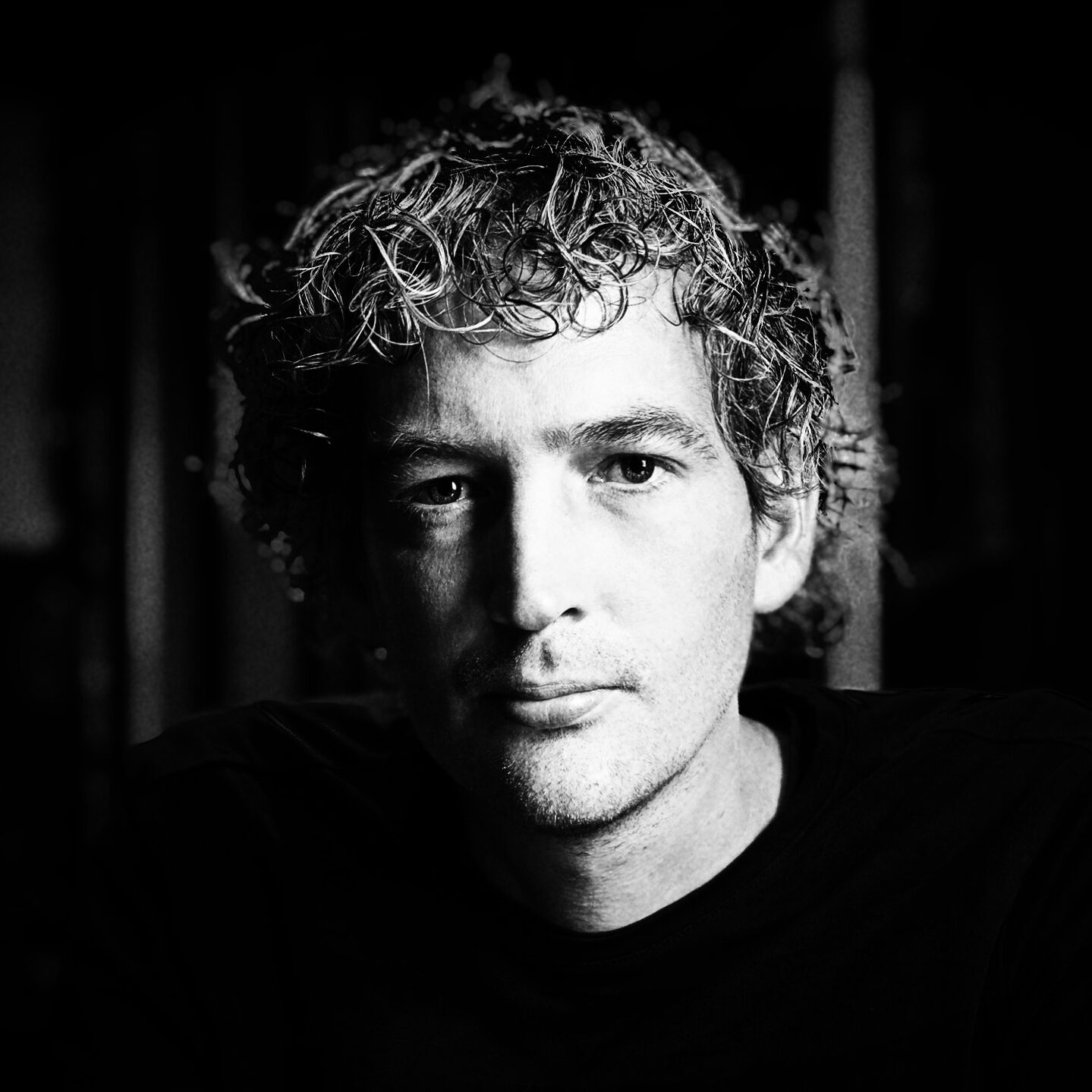
Important: Betancourt has never personally been charged with a criminal offense—not in the United States, not in Switzerland, not in Spain, not in Venezuela—and, through his U.S. attorney Jon A. Sale, denies any wrongdoing.”
According to the Washington Post, Betancourt, 46, has been the subject of multiple money-laundering investigations in three countries over the past decade. All of these leads point to the same place.
The U.S. case. In July 2018, the U.S. Department of Justice filed a criminal complaint in Florida regarding a $1.2 billion money-laundering scheme in which top officials of the state-owned oil company PDVSA, bankers, and businessmen allegedly siphoned off and laundered money through, among other things, Miami real estate. Eight men were indicted, including a cousin of Betancourt. Betancourt himself was not charged—but in 2019, the Miami Herald identified him as an unnamed co-defendant in that complaint, a fact later confirmed to the Washington Post by sources familiar with the matter.
The lobby. That same year, Betancourt hired Rudy Giuliani, who at the time was President Trump’s personal attorney. In August 2019, Giuliani stayed at Betancourt’s estate near Madrid during a trip in which he met with Ukrainian officials regarding Trump’s political investigations. A month later, Giuliani, along with other attorneys, sat across from the head of the Justice Department’s criminal division to argue that his client should not be prosecuted. Betancourt was, in fact, never indicted.
Switzerland. In 2019, prosecutors in Zurich opened a money-laundering investigation into loan proceeds that were allegedly deposited into Swiss bank accounts, resulting in an arrest warrant. The Washington Post reported on August 27, 2026, that Switzerland withdrew its extradition request to the United Kingdom this spring and that British travel restrictions were lifted following U.S. diplomatic intervention. The United States never acted on the Swiss warrant. Instead, they repeatedly allowed Betancourt to enter the country for discussions with the Trump administration.
Spain. The Audiencia Nacional is investigating a 2012 loan between PDVSA and a private company, in which investigators suspect a fraudulent transaction of $4.85 billion and approximately $42 million in bribes paid to three Venezuelan officials. That case was dismissed in March 2026 and reopened in June 2026 by the criminal division, which deemed the dismissal premature. The case is therefore still pending.
Then there’s the backstory behind his fortune. In the early 2010s, Betancourt and his partners were awarded contracts by the Venezuelan government to build power plants, even though they had no experience in that field—which earned them the nickname “bolichicos,” the boys of the Bolivarian Revolution. The investigative consortium OCCRP documented that his company, Derwick, was awarded eleven energy projects between 2009 and 2011, totaling about five billion dollars, all without a competitive bidding process. The Venezuelan chapter of Transparency International estimated the actual costs at 2.1 billion—a difference of about 2.9 billion. Derwick denies that there was any overpricing.
One point of confusion that often arises deserves clarification. Betancourt is not named in the U.S. criminal case against former treasury custodian Alejandro Andrade; that is a separate case. However, in 2024, Venezuelan businessman Raúl Gorrín was indicted by the United States for involvement in the same alleged loan scheme that is currently under investigation in Switzerland and Spain.
What has changed since January is not the suspicion but his position. According to the Washington Post and Bloomberg, Betancourt emerged as a key figure between Caracas and Washington, and he helped secure the first contracts that got Venezuelan oil exports back on track. In Venezuela, the criminal cases against him for currency offenses were dismissed. In August, American businessman Harry Sargeant III sold his minority stake in NABEP for $300 million to a party affiliated with Betancourt; shortly after the signing, the U.S. Department of the Treasury froze the assets of Sargeant’s offshore company.
In a statement on Monday, Betancourt thanked Trump and Rodríguez and said that Venezuela is blessed with natural resources and untapped potential, which this transaction will unlock for the benefit of both Venezuelans and Americans.
The man who was investigated by three governments over the course of ten years is now the partner through whom the U.S. government is buying into the Venezuelan oil industry. That is not an accusation—after all, no charges were ever filed. It is, however, the fact that every story about this agreement must address.
The Parallel Track: Chevron
In addition to this deal, there is a second initiative that has indeed resulted in signed, verifiable documents. Chevron announced a swap in which it is consolidating its position in Venezuelan heavy oil: the joint venture Petropiar will receive the Ayacucho 8 block, and Chevron’s stake in Petroindependencia will increase by more than thirteen percentage points to forty-nine percent. In exchange, Venezuela will receive Chevron’s interests in two gas blocks in the Plataforma Deltana and just over twenty-five percent of Petroindependiente—a different company from Petroindependencia, despite the nearly identical name. This is stated in Chevron’s own press release, a primary source. The swap was already announced in April.
Chevron’s Venezuelan joint ventures collectively produce approximately 260,000 barrels per day. Around the time the agreement was announced, Reuters reported that Chevron would complete the transition of all its Venezuelan joint ventures to the new legal framework. As of this writing, there has been no independent confirmation that this broader transition has been completed. Chevron itself, the only U.S. oil company operating in Venezuela, declined to comment on the agreement. ExxonMobil did the same.
The Legal Basis
Venezuelan legal experts point to a series of constitutional articles that conflict with this agreement. Article 12 declares hydrocarbon reserves to be part of the public domain: inalienable and imprescriptible. Other provisions require the approval of the National Assembly for contracts of national interest and for agreements with foreign states or with companies not established in Venezuela.
That’s the catch. Because the amended law requires the operator to be domiciled in Venezuela, a contract with a Venezuelan company may fall outside the scope of that prohibition. An agreement with the U.S. government, however, does fall under that prohibition—and the fact sheet now explicitly describes an agreement between the U.S. government and NABEP, governed by U.S. law. No source found authoritatively resolves that point, and without the text of the agreement, it cannot be resolved.
The Rodríguez administration argues that the amended law allows for operational access contracts without transferring ownership of the resources. Former Oil Minister Rafael Ramírez called the agreement unconstitutional and described it as the greatest plunder in Venezuelan history. Harvard economist Ricardo Hausmann called it a grab for assets and an unconstitutional agreement with an illegitimate government. Economist Francisco Rodríguez called on the National Assembly to reject it. In Caracas, government supporters also took to the streets, while the ruling PSUV party expressed its full support—a remarkable turnaround for a movement that had championed oil sovereignty for decades.
On the U.S. side, Democratic Senators Tim Kaine and Chris Van Hollen called the operation corruption on an epic scale. Former U.S. energy advisers warn that the agreement carries political risk, as a future administration in Washington or Caracas could challenge it.
One quiet move is worth noting. On August 27, one day before the announcement, the U.S. Office of Foreign Assets Control (OFAC) amended eight general licenses at once: 46D, 47B, 48C, 50C, 51C, 52B, 54B, and 61A. The same clause was removed from all eight—contracts with the Venezuelan government no longer need to be interpreted under U.S. law. The requirement that disputes be settled in the United States, the United Kingdom, France, or Singapore remains in place. OFAC cites the investment reforms that Venezuela has implemented since January as the reason for this change. In May, legal experts pointed out precisely this conflict: the U.S. license required U.S. law, while the Venezuelan model contract specified Venezuelan law and arbitration in Paris. One day before the announcement, the obstacle had been removed.
What We Still Don't Know
The fact sheet answers many questions, but it is not an agreement. A list of what is missing is more important here than a conclusion.
The text of the agreement itself. There is no decree, no ministerial resolution, and no contract published in the Gaceta Oficial. Consequently, there is also no Council of Ministers decision that would legally authorize the award without a competitive bidding process, no notification to the National Assembly, no document specifying the royalty and tax rates for each project, and no legal basis for the 34 percent rate.
A Venezuelan signatory. Rubio and Hegseth signed on behalf of the United States. On the other side are “the Venezuelan interim authorities,” listed without a name.
The names of the seventeen fields. Reuters has seen the list but has not published it; since then, not a single field name has surfaced. It also remains unclear what will happen to the existing contract of a small Chinese company that, according to Reuters, operates some of the mature Maracaibo fields. That’s a tricky question, because PetroChina had already instructed traders in January to stop dealing in Venezuelan oil subject to U.S. sanctions, and a U.S. license issued in February barred Russian and Chinese parties from engaging in Venezuelan oil transactions.
The Pentagon's response to its own contradiction. And the responses from the Departments of the Treasury, State, and Energy to questions from Congress.
The creditor issue. Venezuela is saddled with tens of billions in unpaid bonds and arbitration awards; the U.S. Secretary of Energy himself acknowledged that the claims amount to tens of billions. I have not been able to verify the exact figures that are circulating. But the logic is clear: any new revenue stream immediately becomes a target for creditors. That is precisely what Executive Order 14373 protects the current revenue stream from. Whether a future revenue stream of two hundred billion dollars will receive the same protection—and whether that protection will hold up in court—remains publicly unanswered.
In conclusion
There is now an official U.S. description of the largest oil deal ever. There is a country whose head of state is granting 100-year concessions under a mandate that expired two months ago. There is a U.S. government agency that, according to its own spokesperson, is not allowed to do what the White House says it has done. There is a partner that was investigated for ten years in three countries and was never charged. There is a cash flow of 13 billion dollars without a completed audit process. And there is still no text.
The latter is not a procedural error. As long as the agreement is not public, any statement regarding its legal validity, tax terms, and exact distribution remains a reconstruction based on what two governments have chosen to say about themselves—including this one. The first document that truly changes anything about this story is the agreement itself.
Accountability
This article is based on primary sources where available: the White House fact sheet dated August 31, 2026, the published Venezuelan legislation, U.S. legislative proposals and congressional letters, publications and explanatory notes from the U.S. Office of Foreign Assets Control (OFAC), a Chevron press release, and reports from the Congressional Research Service. Supplemented by reporting from AP, CNN, Reuters, the Wall Street Journal, Bloomberg, the New York Times, the Financial Times, NPR, CBS, PBS, The Economist, the Washington Post, and OCCRP.
Wherever the text states that something is based on a single source, is unconfirmed, or is contradicted, that is a factual statement and not a figure of speech. Some facts circulating elsewhere have been deliberately omitted because they could not be verified. For experts, a separate appendix follows with a complete claim-by-claim justification and source citations.
Record date: September 1, 2026.