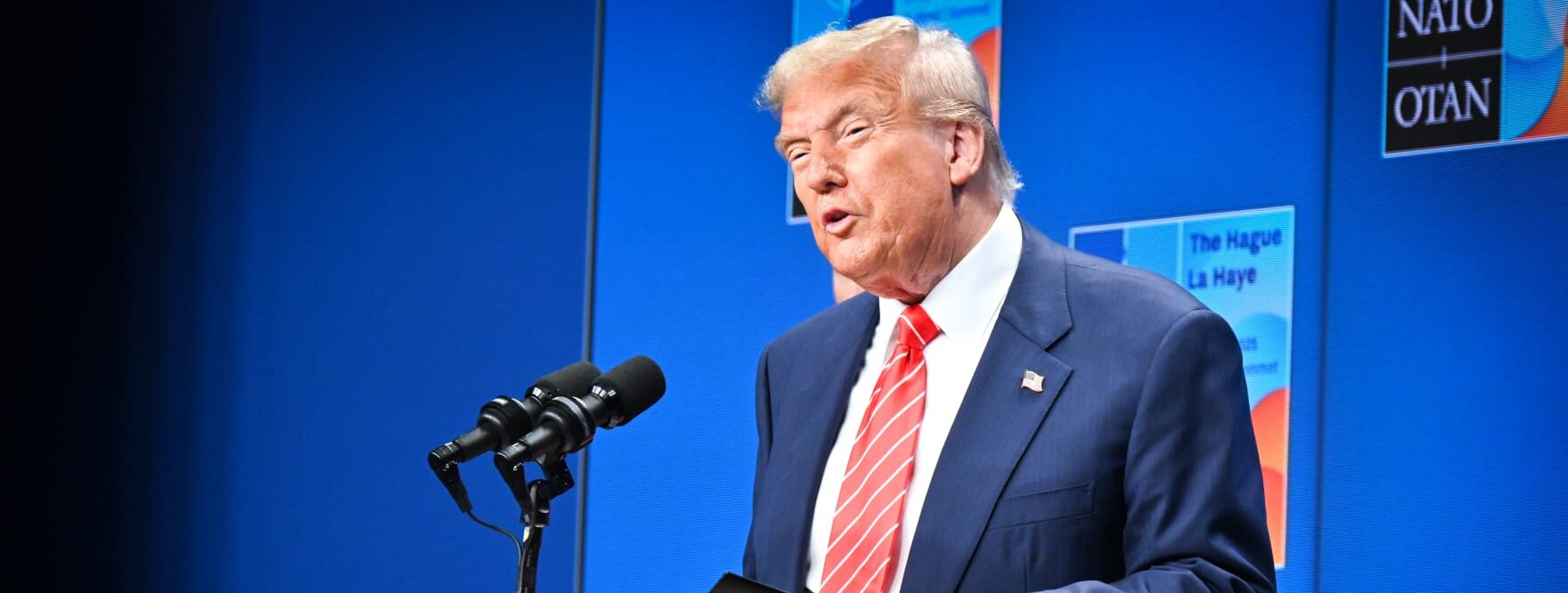
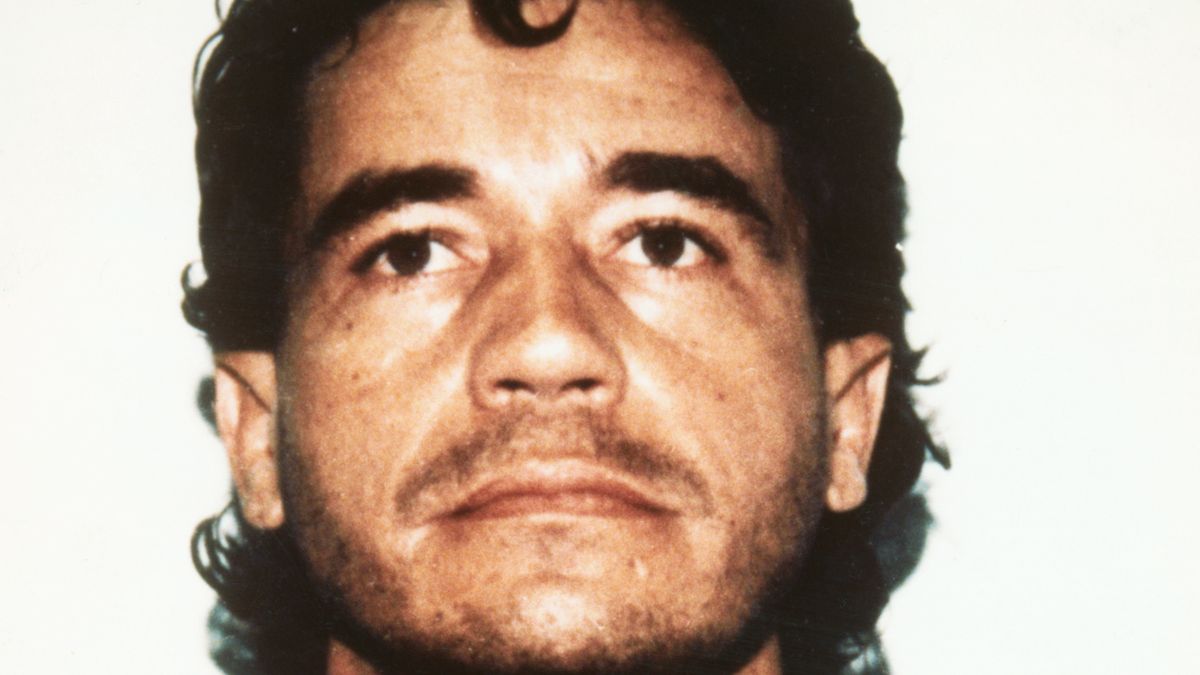
The video lasts ten seconds. A drone hovers over the jungle of southeastern Bolívar; a building with a green metal roof fills the frame, and then it explodes in a white flash. The President of the United States posts it on Truth Social and writes: a swift and lethal kinetic strike. A swift, deadly blow. And with that, so the story goes, Héctor Guerrero Flores—alias Niño Guerrero, the Warrior’s Child—has vanished from the face of the earth. For over a decade, he was the face of the Tren de Aragua.
I met that man in the world he had built for himself. That’s why I keep coming back to those ten seconds—not out of sentimentality, but because I know how little a bird’s-eye view reveals of what’s happening on the ground.
The Man Behind the Roof
In 2014, I voluntarily spent a few days locked up in Tocorón, the prison in Aragua state that Guerrero had turned into his capital. In 2017, I returned. It was no longer a prison in any sense that we recognize. The state had relinquished control and was now only guarding the fence; inside, the warrior's child reigned supreme. There was a swimming pool. A zoo with flamingos and a panther, fed day and night, while the animals in Caracas’s state zoo were starving to death. A disco, restaurants, gambling dens. A bank—the Banco de Tokyo—that transferred money for a ten percent commission, and offered loans at ten to twenty percent interest. A building designed for 750 prisoners, converted into a small village that housed many thousands. And a courthouse, where Guerrero himself presided over trials.
I’m not telling this story to romanticize the man. I’m telling it because it reveals something that disappears in ten seconds of drone footage: this was no fringe gang. Just like Tocorón—until it was razed by the government—the gold mines were also a state within a state, with their own economy, legal system, and population. You can’t build something like that without the real state allowing it. And something like that doesn’t disappear with a single explosion.
Who says he's dead?
Let’s be precise about what we know. On June 12, U.S. Southern Command reported a deadly attack in southeastern Bolívar (which had taken place on the morning of June 9). Trump announced it late that evening and said the operation had been coordinated with his friends in Venezuela. Secretary of War Pete Hegseth confirmed this on behalf of the Pentagon. The Venezuelan Ministry of Communications confirmed this on behalf of Caracas.
That’s where the confirmation ends. Three parties were involved, and all three needed this story. Trump wanted a victory in his crusade against the cartels. The government of Delcy Rodríguez—which has held de facto power since the Americans removed Maduro from Caracas in January—wanted to prove its worth to Washington. The reporting is based entirely on statements from both governments; no physical evidence has been made public. Major media outlets are treating his death as a fact, but always with phrasing such as ‘Trump says’ or ‘the U.S. and Venezuela say.’.
I’ve learned not to take such death tolls at face value. When I walked through Tocorón in 2017, the official death toll from the clashes in which Guerrero had regained power stood at sixteen. The videos the prisoners showed me told a different story. In Venezuela, the gap between what the authorities claim and what actually happened is not an isolated incident—it is the norm. That was the case during the 2014 protests, and it was the case with the regime’s extrajudicial executions in the years that followed.
And the on-the-ground reporting this month paints a much more chaotic picture than those crisp ten seconds. The Venezuelan La Patilla followed the operation day by day. Not a surgical strike, but a ground operation that began on Monday, June 8, and lasted for days, targeting a whole series of gang leaders at once. Armed helicopters hovered over the gold fields. After 72 hours of the incursion, no official authority had confirmed whether there were any deaths, injuries, or arrests. News of Guerrero’s death initially circulated as a rumor, as an unofficial account, and within WhatsApp groups. On June 10, residents of the mining town of Las Claritas blocked the access road and demanded that the operation be halted, citing mistreatment and, in their words, human rights violations. To date, no figures have been provided regarding the number of mines cleared or the number of people displaced.
I have to be honest here, because doubt that only goes one way is propaganda. Even María Corina Machado—opposition leader, Nobel Prize winner, and the face of the democratic resistance—publicly praised Trump for the operation. And the Wall Street Journal reported that the CIA provided the key intelligence. The official story carries weight and has sources. But from what I gathered from people on the ground, Guerrero and two others had been warned three days before the operation began. I’ll leave it to the reader to decide what that means for the image of the elusive fugitive being snatched from the sky. I’ll simply note this: the only ones confirming his death are the parties who stand to gain from it, and the people who lived there saw something other than a ten-second flash.
Why there of all places?
It’s no coincidence that Nino was located in southeastern Bolívar. Las Claritas and Kilómetro 88 sit atop Venezuela’s largest gold reserves, near the border with Brazil and Guyana. Guerrero’s co-founder, Yohan Petrica, had been running an illegal gold mine there for years; that is why Guerrero found refuge there.
And this is where it’s worth reading more slowly. The operation came about two months after Caracas had passed a new mining law—a law that allows foreign investors access to precisely these gold-mining areas. First, the gold sector is legally opened up to foreign capital. Then, the criminal network that had been operating there is dismantled—or appears to be dismantled. Who benefits from the vacuum left behind is a question the drone footage does not ask.
Not an incident
Because Guerrero isn't an isolated case. He is the most recent, most spectacular moment in a trend that has taken shape over the past six months.
In January, U.S. troops took President Maduro and his wife from Caracas to a prison cell in New York. In February, Nemesio Oseguera, known as “El Mencho,” the leader of the Jalisco Cartel, was killed in Mexico during a Mexican operation based on U.S. intelligence, followed by a wave of retaliatory violence in which twenty-five members of the National Guard were killed. And now Guerrero.
Underlying all of this is the deadliest constant: since September, the U.S. has been blowing up small boats it suspects of drug smuggling. By mid-March, a defense official confirmed to Congress that 157 people had been killed across 47 vessels; by summer, the death toll had risen well above two hundred. The public has not been shown any hard evidence that all the affected boats were transporting drugs; what we see are grainy videos of explosions and very limited official information. And when Congress asked whether fewer drugs were now entering the country, the defense official could not demonstrate this; he merely pointed to a decrease of about twenty percent in the movements of suspicious boats. Dozens of people are being shot out of the water for a campaign that, by its own figures, is not reducing the flow of drugs.
There’s one image from that campaign I just can’t get out of my head. It was in the records of the Dutch House of Representatives: two crew members of a boat that had come under fire were bombed while clinging to the wreckage of their ship. That’s not an interception. That’s the killing of shipwrecked people.
The roof over the system
In Doral, at Trump's own golf resort, the Shield of the Americas—the Americas Counter Cartel Coalition—was founded, with Kristi Noem as its envoy.
The significance lies in who was absent. Brazil, Colombia, and Mexico—the three largest countries in the region, which together account for more than half of the region’s gross domestic product, all three led by governments that are not to Washington’s liking—were missing. A coalition against drug trafficking without the world’s largest cocaine producer, without the most important transit country, and without a producer of Peru’s caliber. The selection was not operational. It was political. Membership did not depend on how much drugs flowed through your country, but on how willing you were to listen to Washington. And Noem articulated the second agenda openly: the coalition had to curb Chinese influence in the region’s economy and infrastructure. It’s not just about cocaine. It’s about pulling an entire hemisphere away from Beijing.
Cuba: the same hand, without a glove
Nowhere is this method more blatant than in Cuba. When Maduro fell, Cuba’s fuel supply dried up; Venezuela had been supplying Cuba with oil for decades—or rather, Cuba had ensured all those years that it would continue to receive oil from Venezuela. On top of that, Trump threatened to impose tariffs on any country that continued to supply oil to Havana. The island plunged into darkness: days-long blackouts, parts of Havana without power for nineteen hours a day, protests, and a party headquarters set ablaze.
And the demand behind it was not concealed. Rubio made it clear that the embargo would only be eased once political change took place and ‘new people were at the helm.’ Hunger, openly, as leverage for regime change. Havana’s response followed the script set by Caracas: the announcement of the release of fifty-one prisoners, and talks. Pressure, a gesture, dialogue.
The smoothest lever
The final piece of the puzzle is the quietest—and therefore perhaps the most enduring: the ballot box. In a number of countries, governments that align with Washington have come to power. Note that word—in Latin America, such a government is called “right-wing,” but that label covers a spectrum ranging from Milei’s market radicalism to Bukele’s security authoritarianism, and it has little to do with what a European imagines when hearing the term. The common denominator is not economics and not even ideology. It is the willingness to go along with the flow.
Chile elected José Antonio Kast as president. And in Colombia—the world’s largest cocaine producer, tellingly excluded from the Shield—the outsider Abelardo de la Espriella won the first round of the election: a hard-liner on security and openly supported by Trump. Incumbent left-wing President Petro alleged fraud, but international observers described the election as orderly and transparent; the claim did not hold up. In Venezuela, it was the losers who cast doubt on the results. In Colombia, the losing incumbent administration is now doing the same. The second round will take place this coming Sunday, June 21. The direction is easy to guess.
The threads intertwine in an almost unsettling way. Alex Saab, Maduro’s finance chief—who was handed over by Venezuela to the U.S. in May and may become a key witness against his former patron—was once represented in court by that same De la Espriella. The man who could come to lead Colombia once defended the accountant of the regime that Washington has just ousted.
And then, the silence
This is what I want to get at, because this is what concerns me the most. Not power—power does what power does. But the silence surrounding it.
It wasn’t always there. When Maduro was removed in January, for example: within a day, Brazil, Colombia, Mexico, Chile, Spain, and Uruguay, among others, issued statements condemning the unilateral action; some called it a dangerous precedent. Sheinbaum said it jeopardized regional stability. Petro demanded an emergency session of the Security Council. There was a voice.
Five months later, with more than two hundred people killed as a result of U.S. operations against drug trafficking, and in Guerrero, that voice has fallen silent. And it’s not hard to see why. Trump has since punished or threatened each of those leaders for not falling in line—with tariffs, with exclusion, with support for their domestic rivals—while those who show loyalty are rewarded and shielded from scrutiny. The resistance didn’t just evaporate on its own. It was made too costly to maintain. That isn’t an absence of opinion. That’s an opinion that has been bought off or suppressed.
And look beyond the region. Human rights institutions did, in fact, speak out; the UN High Commissioner had already described the boat attacks back in October as violations that must stop immediately, and UN experts said that whoever ordered and carried them out should be prosecuted for murder. But a statement is not enough. Which government with real power has put a price on it? Are you listening, Europe? A continent that for years spoke endlessly about democracy and human rights in Venezuela is now watching as two hundred people are killed without trial and says nothing with any real teeth. No sanctions, no ambassador recalled, no condemnation that actually costs anything.
My own country, least of all, and that affects me personally, because Curaçao is located about seventy kilometers from the Venezuelan coast. For years, the Netherlands worked together with the U.S. Coast Guard: marines boarded suspicious ships based on U.S. intelligence, tens of thousands of kilograms of cocaine were intercepted, and suspects were handed over for trial. Trial—note that word, because that is precisely what distinguishes a constitutional state from a firing squad. When the U.S. switched from boarding to firing on ships, the Netherlands withdrew from international waters. A wise move. But when asked for an opinion, Prime Minister Schoof said the cabinet had not yet taken a position, and he emphasized that the Netherlands is not involved. Former diplomats warned why that isn’t enough: if your intelligence leads to boats that are subsequently shot down at sea, you’re involved, whether you like it or not. You don’t want, said a former ambassador to Venezuela, to be accused of having led them there. Withdrawing without condemning is not neutrality. It is looking the other way with the goal of having a clear conscience.
Who has benefited from this?
Ask the simple question, “Who benefits?” and the pattern becomes clear.
Washington regained control of its backyard: Maduro behind bars, Caracas cooperating, Havana brought to its knees, a coalition under its thumb, and China pushed back a step. The Rodríguez administration retained its position by delivering exactly what was asked of it. Foreign capital, now allowed into Venezuela’s gold and oil sectors, was given a clear playing field. Loyal leaders received their rewards. Those who resisted paid the price.
And who paid the price? The two hundred in the water, whose names no one knows and whose bodies no one saw. The shipwrecked survivors clinging to their wreckage when the second missile struck. The Cuban who sits in the dark nineteen hours a day because hunger has been elevated to a policy tool. The residents of Las Claritas, who saw their town flooded with armed helicopters and whose dead aren’t even counted. The ordinary people, time and again, while the power above their heads changes hands.
The head is gone, but the body is intact
In February, I wrote about Venezuela after Maduro, saying that it wasn’t a transition but a consolidation: America had removed the head of the regime and left the body in place, and was now speaking through that same mouth. What I wrote then about a single country now applies to an entire continent. Except that the voice is now that of an entire region that has learned when it is better to remain silent.
Notice how silence has been bought. Not with money, but with the victims’ choice. A cartel boss. Drug smugglers. A dictator. Who’s going to take a stand for them? Anyone who stands up for the man on the small boat seems to be standing up for the smuggler. And that’s how you buy silence about the method—by choosing precisely those targets that no one wants to defend. But the method remains, even if the targets change. Anyone who looks the other way today when a boat is stopped without evidence will have no grounds tomorrow to call anything else a violation. A precedent never asks for permission. It just waits for the next time.
Perhaps the Warrior’s Child is truly dead. Perhaps a man was blown to pieces last week under a metal roof in Bolívar, and the world is one cruel man poorer. But the question I asked in February now sounds more pressing. It’s not whether Latin America can change—it can. The question is whether it is allowed to change, and by whose hand, and at what cost. Because for the ordinary Venezuelan, the ordinary Cuban, the ordinary Colombian, it ultimately makes little difference whether power comes from Havana, Beijing, or Washington—as long as they have no say in their own future, and the whole world has decided that this is precisely the moment to look the other way.